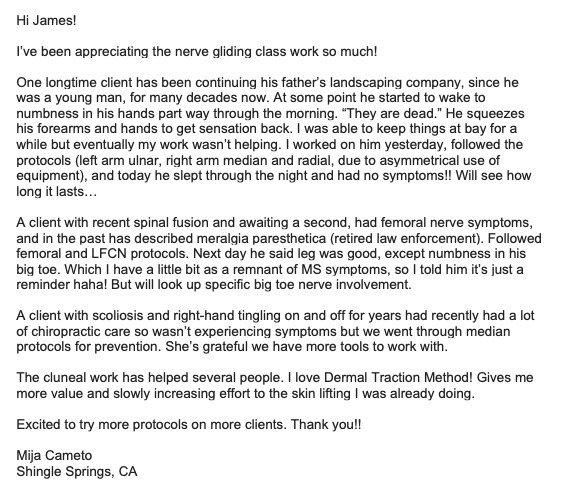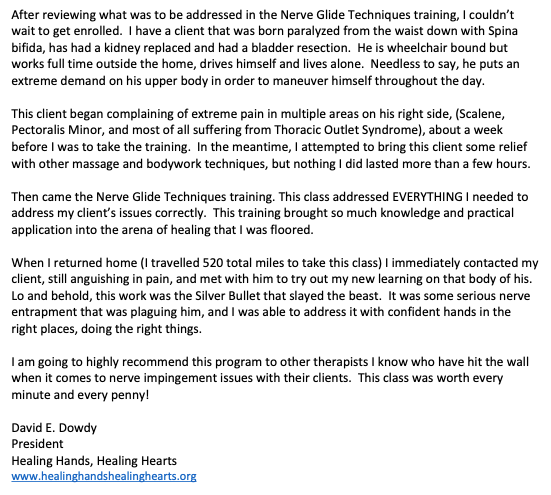



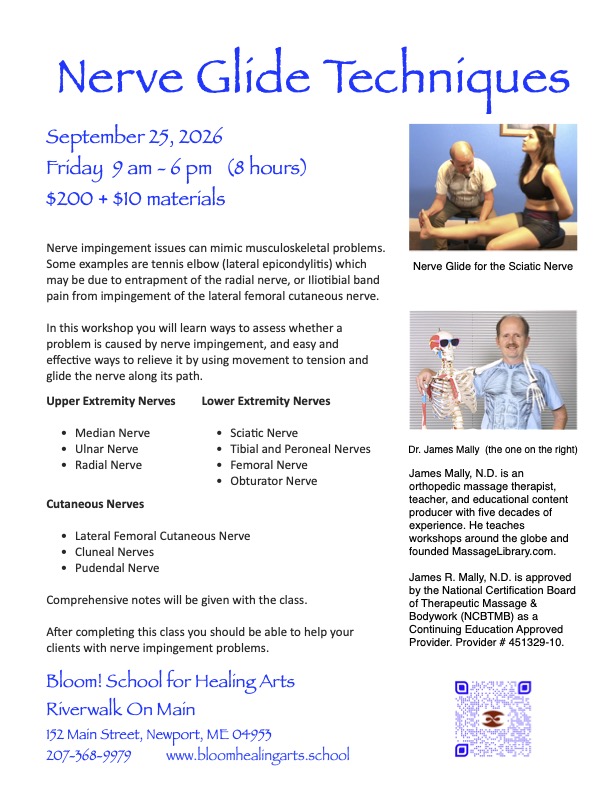
Unlock new levels of clinical success by mastering the art of neurodynamic assessment and treatment. Many persistent musculoskeletal issues—such as tennis elbow or IT band pain—may be rooted in nerve impingement. This hands-on workshop provides you with the precision tools needed to differentiate between muscle and nerve tissue, ensuring you deliver the most effective relief for your clients.
What You Will Learn:
– Rapid Assessment: Master techniques to identify impingements of the median, ulnar, radial, sciatic, femoral, and obturator nerves.
– Targeted Release: Work directly with critical impingement sites, including the brachial plexus, scalenes, first rib, and the lumbar region.
– Neurodynamic Integration: Learn “nerve gliding” to gently restore function and mobility through movement and tensioning.
– Advanced Tools: Experience live demonstrations on using massage cups to relieve nerve tension (please bring your own cups if you have them, though they are not required).
Course Highlights:
– Comprehensive Coverage: Includes specialized protocols for cutaneous nerve patterns like the lateral femoral cutaneous, cluneal, and pudendal nerves.
– Practical Application: Bridge the gap between assessment and treatment with immediate reassessment to track patient improvement.
– Take-Home Resources: Every participant will receive comprehensive notes to ensure you can immediately apply these techniques in your practice.
Workshop Requirements:
To facilitate hands-on practice, please bring shorts (and a sports bra for women).
Don’t let nerve entrapments mimic common injuries—learn to treat the source of the pain and elevate your practice today.
Download a flyer to post at your workplace or share with your colleagues.
Register for this workshop at:
Bloom Healing Arts School
or by calling 207-368-9979
Space is limited!
$200 + $10 materials